
What Emmet County Probate Covers
Probate is the court process for estates and for the property of people who have died. In Emmet County, that work belongs to the 7th Probate District Court. The court reviews wills and settles estates. It appoints people to manage money and property. It also handles guardianship and conservatorship cases, mental-health matters, and juvenile-related services. That range is wider than many people expect, so the same court touches both family care and estate paperwork.
The probate court is one of Michigan's three trial courts, next to the circuit court and the district court. Felony cases and large civil suits go to the 57th Circuit Court. Traffic and misdemeanor cases go to the 90th District Court. Estates, wills, and protective cases go to probate. Marriage licenses and most divorce filings, by contrast, are not probate work at all. Those sit with other county offices and are covered under Emmet County marriage and divorce records.
Staff assignments and program notes appear on the county's official 7th Probate District Court page.
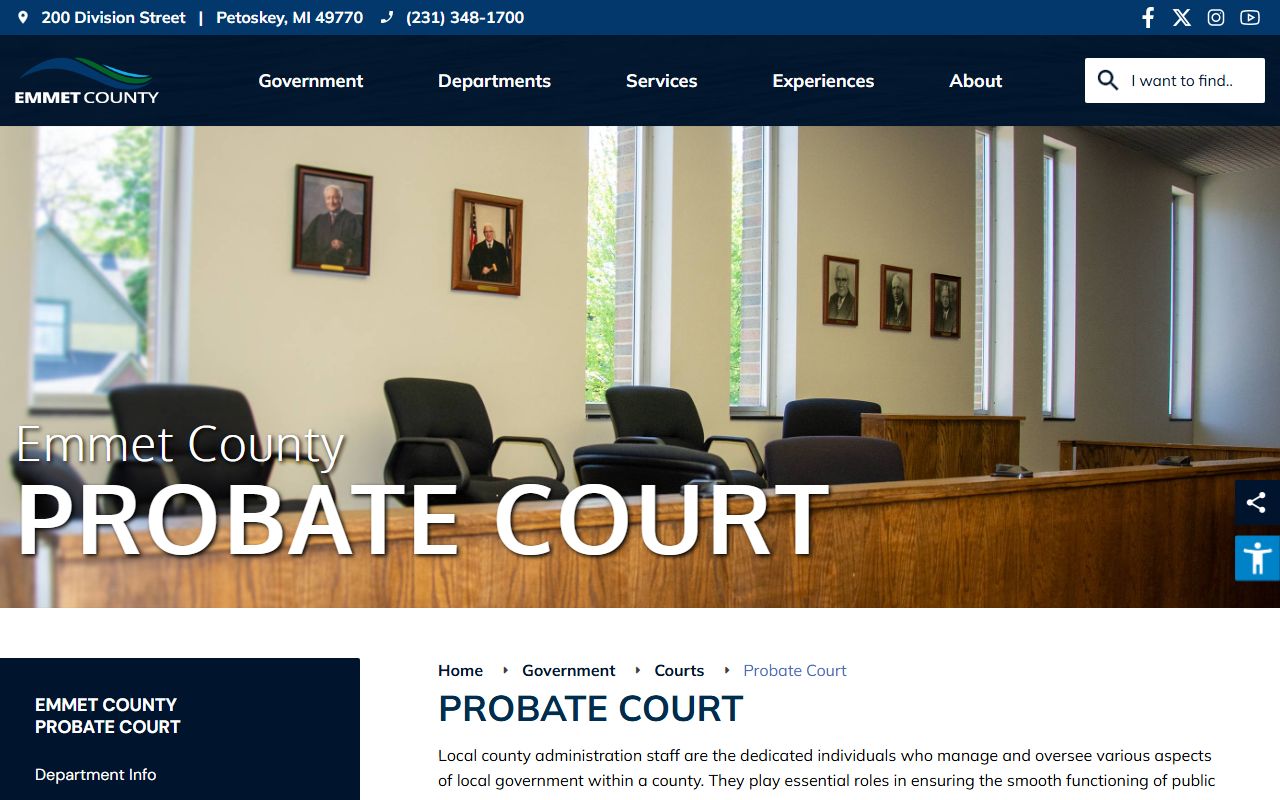
That page names the judge, the register, and the support team who move estate and guardianship cases through the court each week.
Probate Terms Defined
Probate filings use words that rarely come up in daily life. A short glossary helps readers make sense of a docket or a will. These terms show up across most Emmet County probate records.
- Testator
- The person who made the will. The will speaks for the testator after death.
- Executor
- The person named in a will to carry out its terms and settle the estate.
- Personal representative
- The Michigan term for the person who administers an estate, whether or not there is a will.
- Letters of authority
- The court document that proves a personal representative or fiduciary has legal power to act.
- Intestate
- Dying without a valid will. State law then decides who inherits and who serves.
- Guardianship
- A court order placing a guardian in charge of the personal care of a minor or an incapacitated adult.
- Conservatorship
- A court order placing a conservator in charge of the money and property of a protected person.
How to Search Emmet County Probate Records
Emmet County does not run its own probate case database. Instead, the county points people to Michigan's statewide MiCOURT case search. That system can return probate cases along with civil, criminal, traffic, and domestic matters, depending on the court being searched. The county does not create or control the data, so anyone unsure about a date or status should call the probate court to confirm.
A name search is the usual starting point when you do not have a case number. Use the category filter to narrow results to probate. Read the full docket rather than the short summary, since the event chain is where the useful detail lives.
- Open the MiCOURT case search home page.
- Search by last name, or enter a case number if you have one.
- Set the case category to probate to keep estate and guardianship cases separate from other filings.
- Add a date range or filter by status if the name is common.
- Open the case to read the docket, then call the probate court for anything the portal does not show.
Remote access is also possible for some hearings. The court posts a request-to-appear-by-Zoom form, which shows that a party can ask to appear by video rather than in person in at least some probate matters. For records that are old, paper-only, or not visible in the portal, the direct path is a call or visit to the probate office.
Note: MiCOURT confirms that a case exists and shows its history, but it does not issue certified copies, which must come from the court itself.
Emmet County Probate Court Contact
The 7th Probate District Court sits inside the Emmet County Building in downtown Petoskey, on the same campus as the circuit and district courts. Judge Valerie Snyder presides. The office is staffed by a court administrator, a probate register, a juvenile register, and a probate clerk who handle filings, records, and public questions.
7th Probate District Court
200 Division St., Suite 280
Petoskey, MI 49770
(231) 348-1764
Monday to Friday, 8:00 a.m. to 5:00 p.m.
Key staff include Court Administrator Matt Miller, Probate Attorney Tim Smith, Probate Register Jennifer Creamer, Juvenile Register Cynthia Brubacher, and Probate Clerk Sandy Kintz. The probate register handles estate and guardianship filings, while the juvenile register supports the court's youth-related cases.
Probate Filing Fees
Michigan probate courts charge fees for common filings, such as opening an estate, obtaining certified copies, and issuing letters of authority. Emmet County does not publish a separate probate fee sheet in the sources reviewed, and fee amounts change over time. For that reason, the table below lists the general fee categories rather than fixed dollar figures. Confirm the exact current amount with the probate court before you file or pay.
| Probate Service | Fee Basis |
|---|---|
| Petition or estate filing | Set by the Michigan probate schedule; confirm with the court |
| Certified copy of a court document | Per-page or per-document rate; confirm with the court |
| Letters of authority | Issued to the personal representative; confirm the current charge |
| Guardianship or conservatorship petition | Filing fee applies; confirm with the court |
Waivers may be available for those who cannot afford a fee. The probate office can explain which forms to file and which payment methods it accepts.
What Emmet County Probate Records Show
A probate file tells the story of an estate or a protective case from start to finish. The record starts with a petition and, in estate cases, the will if one exists. From there it tracks each order and report the court receives. The documents build a clear paper trail of who was appointed and how the assets were handled.
An estate case tends to move through a steady set of stages. The court reviews the petition, then appoints a personal representative. That person files an inventory of the assets. Notice goes out to interested persons and to creditors, who get a set period to bring claims. The case closes with a final accounting and a discharge order. Each stage adds a document to the file, so the docket reads as a timeline rather than a single record.
Common items in an Emmet County probate case file include:
- The petition that opened the case.
- The will, in a testate estate.
- Letters of authority naming the fiduciary.
- An inventory of estate assets.
- Accountings that report money in and out.
- Notices to creditors and interested persons.
- Guardianship, conservatorship, or discharge orders.
Michigan court rules define what counts as a court record and set the standards for keeping and sharing it. The definition and related rules appear in the state's Michigan Court Rules chapter 1.
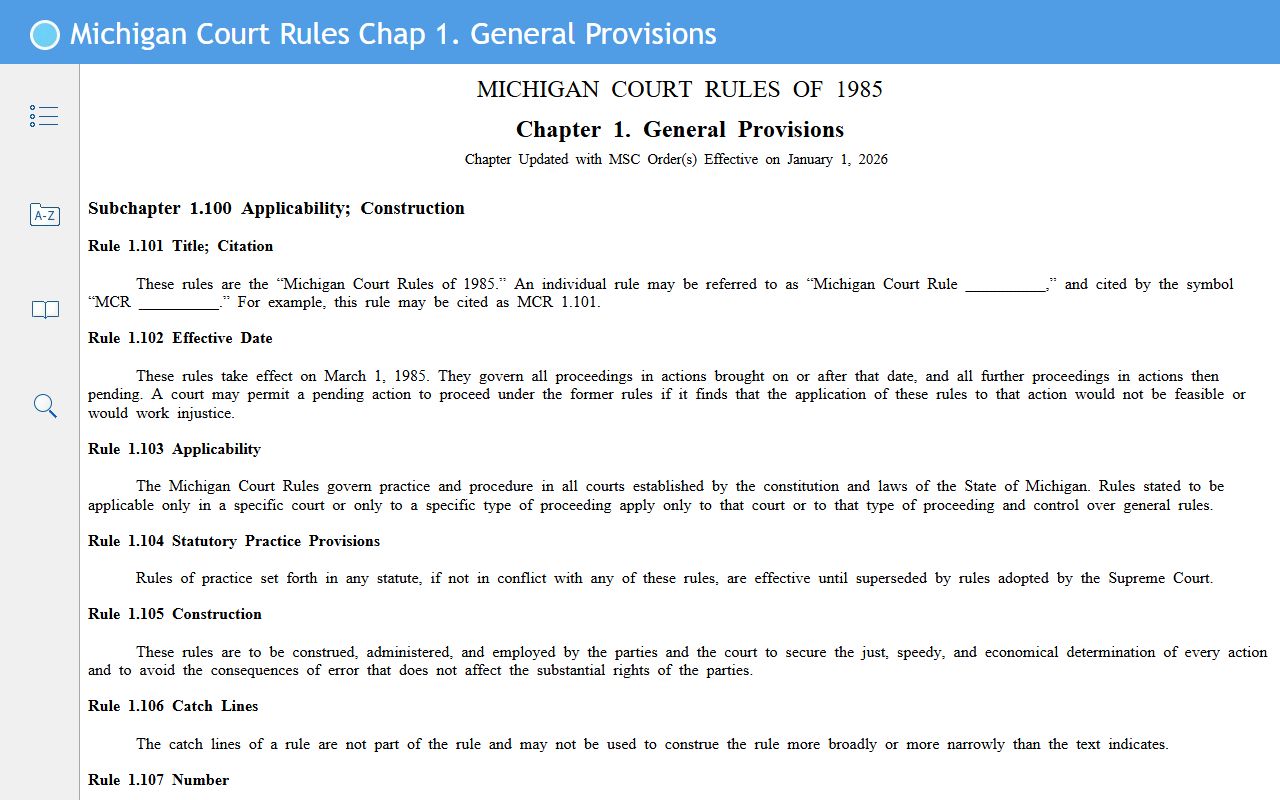
Those rules explain why some parts of a probate file are open while sensitive fields, such as account numbers, are limited or removed. The county clerk handles many other public records, and the Emmet County Clerk is the office for vital records that a probate case may reference.
Juvenile Programs Tied to Probate
Probate in Emmet County is not only about estates. The court is tied to two youth programs that give it real local weight. Both serve juveniles across Charlevoix and Emmet counties.
The Charlevoix and Emmet County juvenile drug court recovery team was chosen as one of six court programs in the nation to help develop best practices. It uses education, treatment, family involvement, and accountability in an incentive-based structure. At any one time the team may work with 15 to 25 youth participants across both counties. Its members include therapists, probation officers, program coordinators, defense counsel, prosecutors, school staff, mental-health counselors, and physicians.
Lakeview Academy is the second program. It was created in 2002 as a cooperative effort between the 7th Probate Court and the Charlevoix-Emmet Intermediate School District. The academy sits next to the courthouse and serves youth ages 12 to 18. It typically enrolls about 28 to 31 students and pairs classes with court-related services for young people in the system.
Restricted Emmet County Probate Records
Not every probate file is open to the public. Several categories carry strong privacy limits because they involve minors, health, or family status. A public search may show limited data on these cases, or nothing at all.
Juvenile records are the clearest example. Michigan law keeps them highly restricted and open only by court order in many situations. The controlling statute is MCL 712A.28, which governs the confidentiality of juvenile case records.
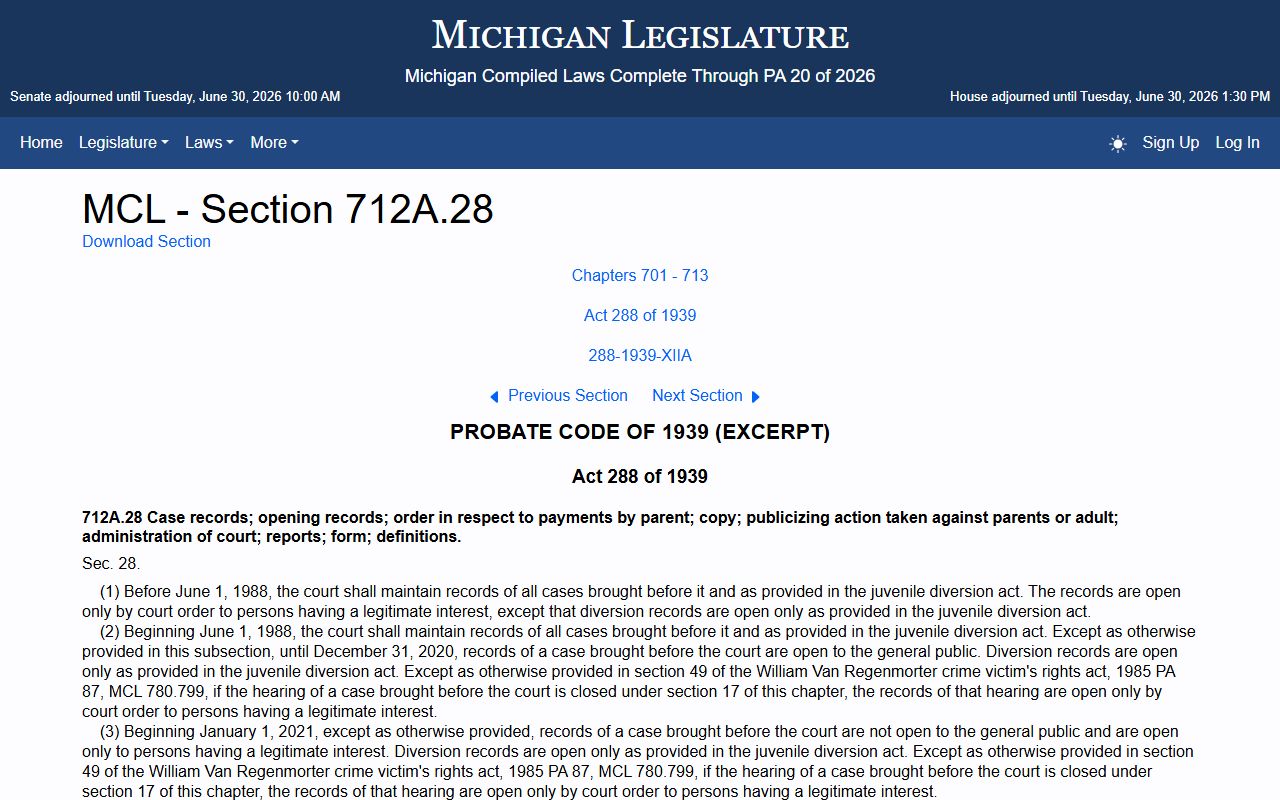
Mental-health proceedings are also confidential or partly sealed, and adoption files are typically closed. Beyond whole categories, courts redact protected data such as Social Security numbers and financial account numbers inside otherwise public files. When a record is not visible online, the honest path is to ask the probate court directly or to file a written request, since a sealed matter cannot simply be pulled up in the portal.
Note: A guardianship or conservatorship over a minor can carry extra limits, so plan to confirm access with the probate office before assuming a file is open.